

Most people who pass through Cambridge are not familiar with the cute white house that stands proudly on 417 High Street, just a block from the heart of the historic district. It dates back to the 18th century and is one of four surviving buildings in Dorchester County with a gambrel roof. This style of roof is common on Dutch colonial architecture, but it reminds me of a barn roof.
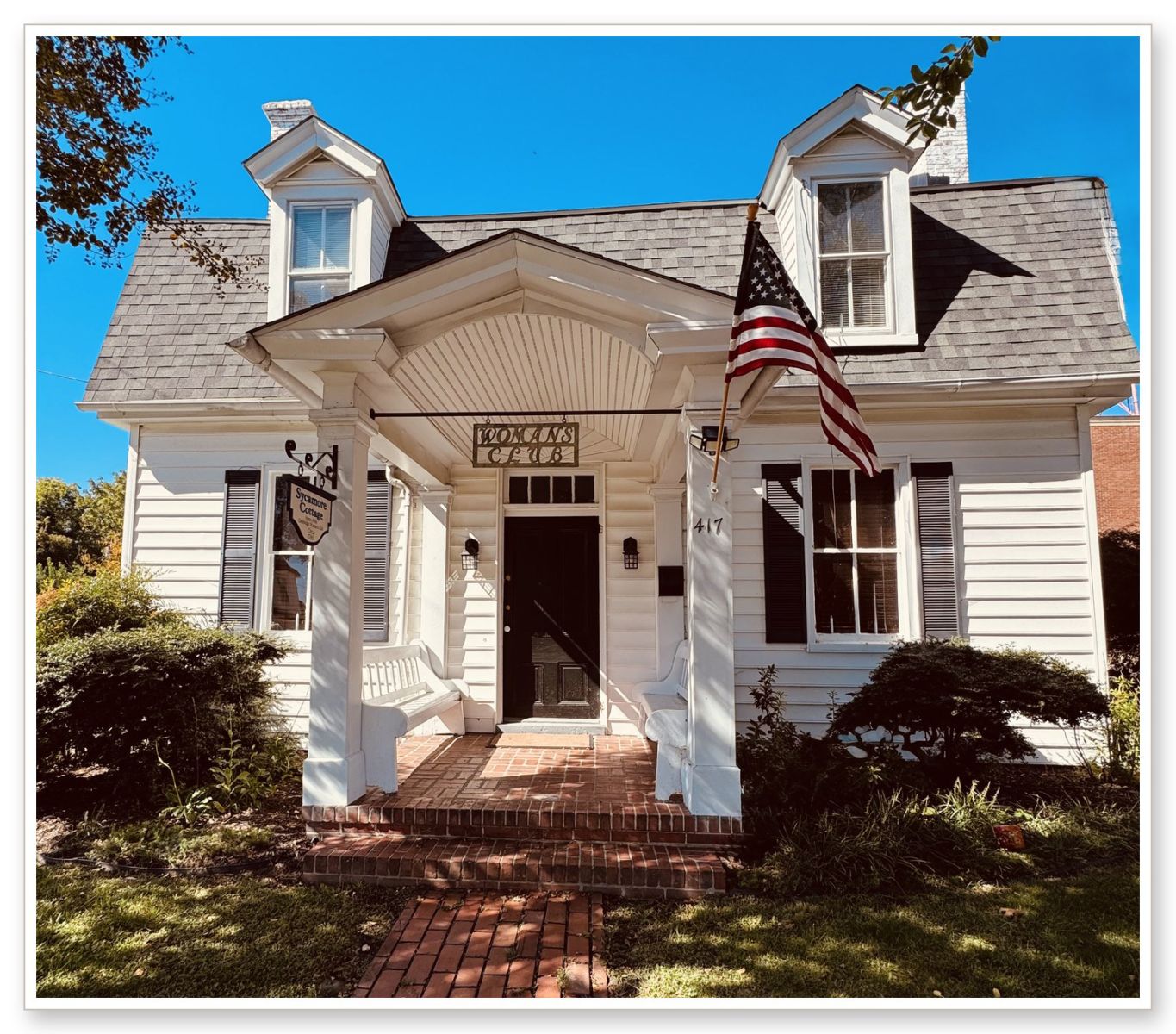
In 1840, Sycamore Cottage was moved three blocks south from 116 High Street to 417 High Street.
Local legend holds this precious cottage was built about 1765 and lived in by Reverend Daniel and Mary Maynadier. I located the National Register of Historic Places form on Sycamore Cottage, but there appears to be some historical errors. I found three generations of Rev. Daniel Maynadiers, some having more than one wife, living in both Talbot and Dorchester counties with land, plantations, and even town lots in Cambridge. So, as you can imagine, tracing the family history and transfer of property through time is confusing.
While scanning through historical documents, I ran across a 1783 assessment record for Dorchester County that taxed Mary Maynadier (likely the wife of the third Rev. Daniel Maynadier and daughter in law to Rev. Daniel and Mary Murray Maynadier) for “improvements” on lot #10 in Cambridge. Her property held one frame dwelling house (our cottage), one kitchen, and two log houses. Prior to modern fire suppression efforts and coal heating, many homes had a detached kitchen to minimize the threat of fire from a rogue ember. Of course, this separation also helped keep the home cool in summer. The two log houses were likely homes for enslaved people. Both the Murray and Maynadier families are documented buying and selling human chattel.
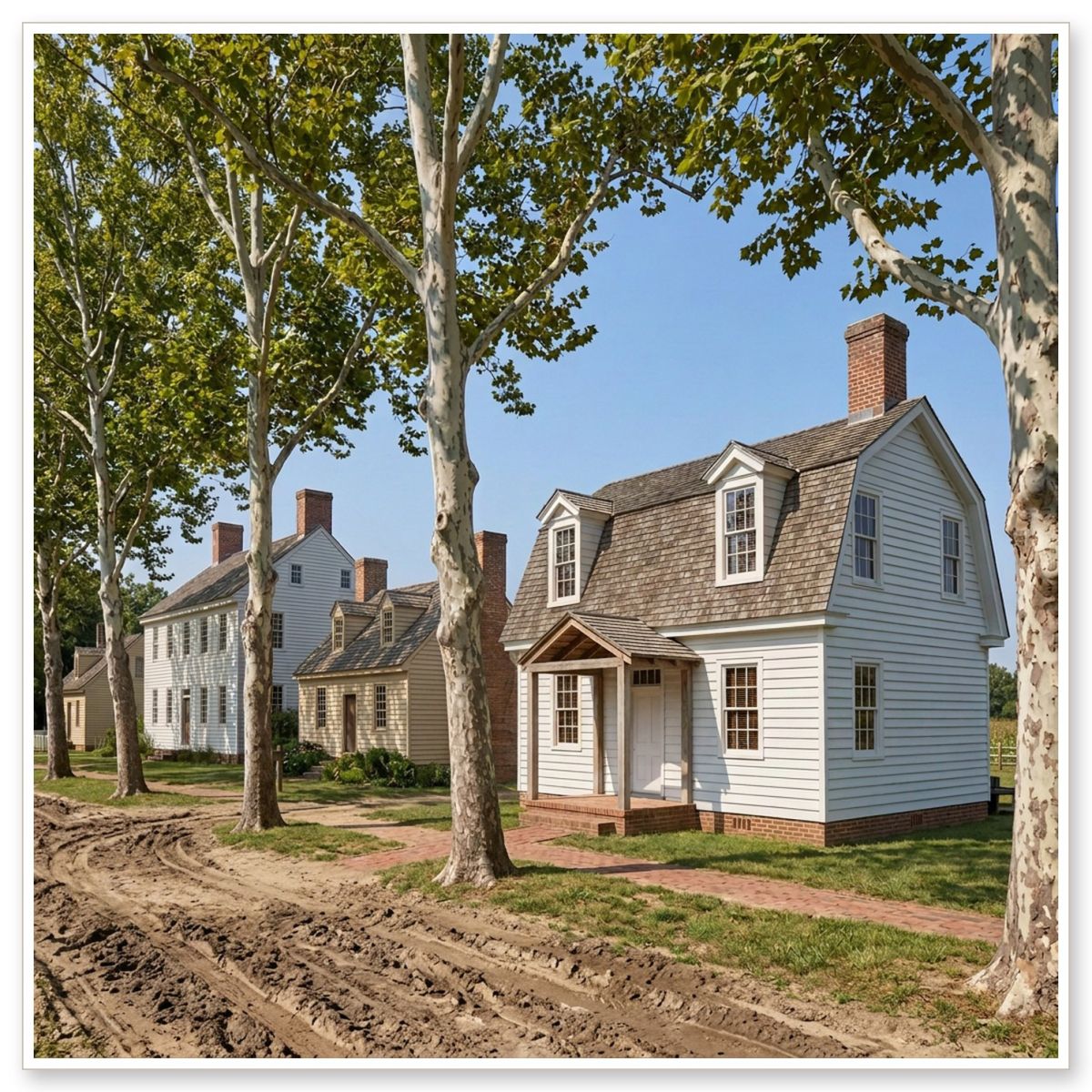
Artistic illustration of Sycamore Cottage's original location on 116 High Street around 1800 displaying the gambrel roof.
The Maynadier family appears to have owned and lived in the cottage until about 1828 when it was sold to Maryland Senator Henry Page. In 1840, Senator Page wanted to modernize and expand his home, so he sold the front and original section of the house (our 18th century cottage) to Jeremiah Wright who rolled it south down High Street to its current location. Once on its new lot, Wright did his own remodeling and added a kitchen.
THE WOMAN’S CLUB
Today, Sycamore Cottage is the home of the Cambridge Woman's Club, originally founded as the Literary Study Group. At first, they held meetings in member’s homes and eventually, the Masonic Lodge on Race Street. In 1922, the Woman’s Club acquired Sycamore Cottage. Here, the library grew and flourished, eventually becoming the Dorchester Public Library.
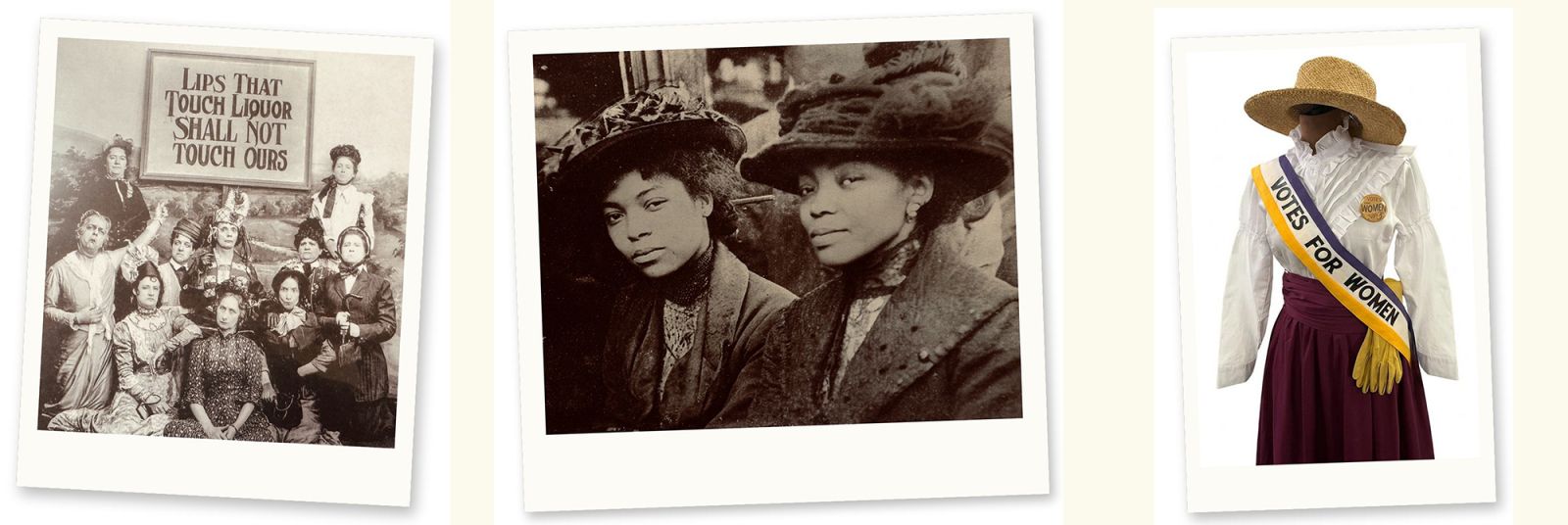
The Dorchester Garden Club was also founded here, in 1930, by ladies who were interested in making the town more beautiful. During World War II, women would gather here to knit garments and make surgical dressings for the soldiers. The Mid-Shore League of Women Voters, the Dorchester Girl Scouts, even the first Cambridge Youth Chess team, all can trace their roots to this address, right here, in Cambridge.
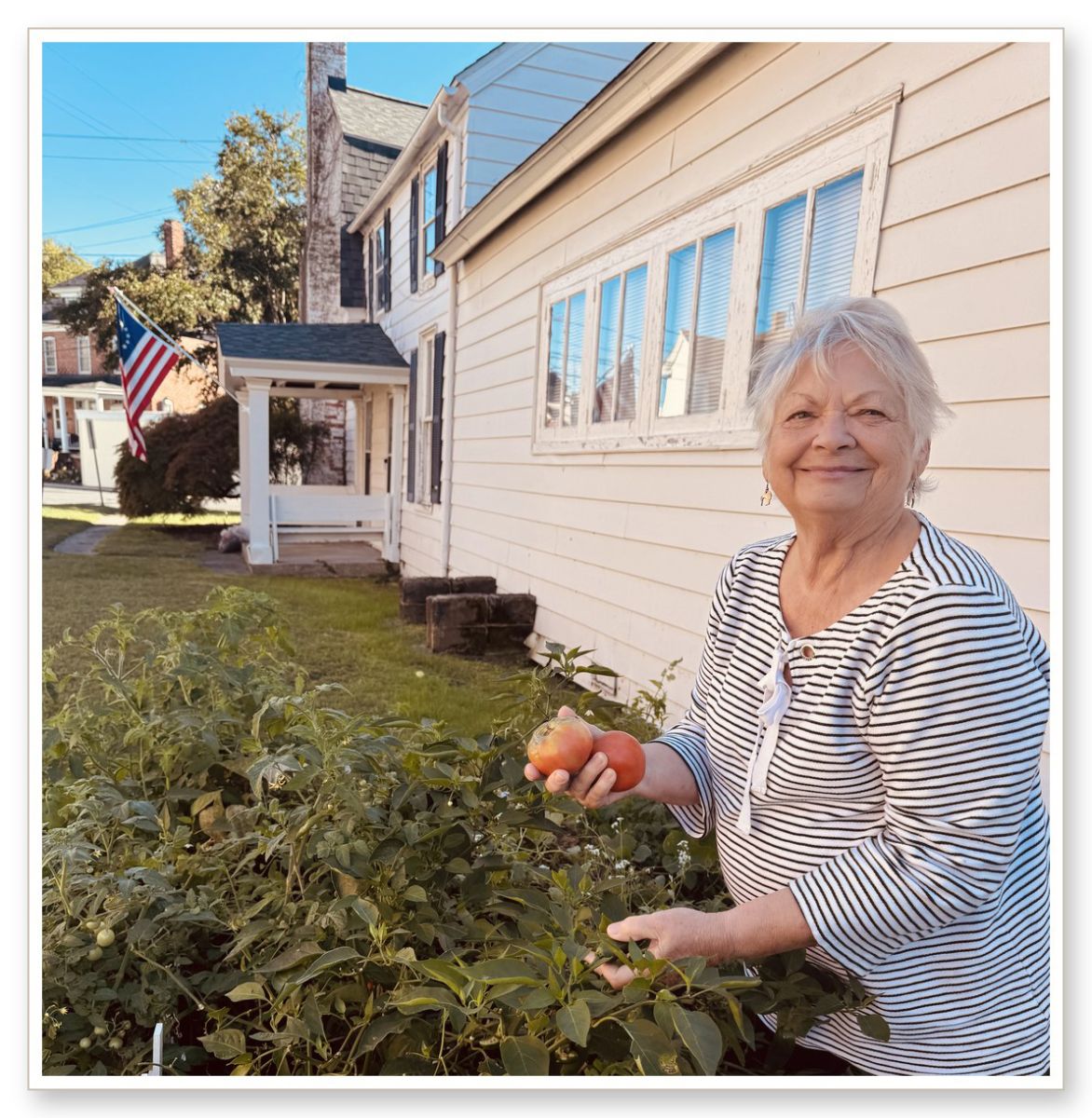 Outside Sycamore cottage is a "Victory Garden" with Ruth Clendaniel, the Cambridge Woman's Club president, picking tomatoes and peppers. During World War I and II, citizens were urged to grow their own food as way to ease pressure on food production needed for the troops. The US also pivoted away from aluminum and tin containers towards glass jars as a way to conserve metal for military weapons, vehicles, and equipment. Mason jar use became very popular!
IT’S BIGGER ON THE INSIDE
Learning all of this history meant I needed to step back in time, and inside the cottage. Walking through the front door brought me into a soft and floral living room with brick red doors. It was homey, with a wedgwood blue colored wingback chair in the corner and a table that likely held many cups of chamomile tea over the years. It felt like a place my grandmother would have recognized, a time before technology and television.
Originally, this large room was divided in two, configured as a hall and parlor with fireplaces warming both spaces. On the left side of the room would have been a half-winder staircase taking the family upstairs to two bedrooms, both with fireplaces. A single back door would have led to a detached kitchen and yard with a privy and outbuildings.
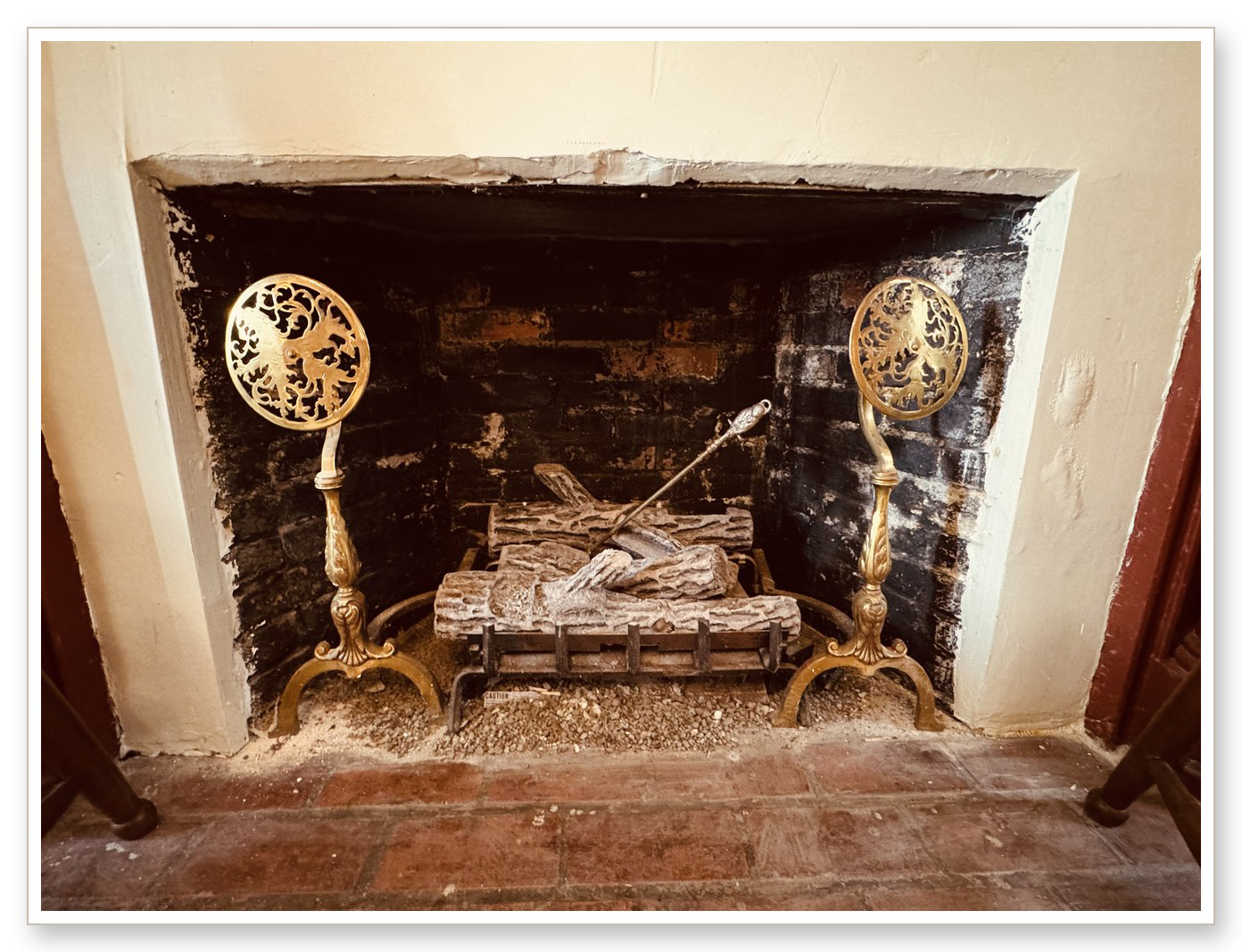 Sycamore Cottage holds two fireplaces on the first floor and two on the second floor.
My eyes continued to dart around the room landing on a porcelain doll held in a glass case. She drew me in, I recognized her. Twenty-five years ago, I dug up a burned and broken doll, like this one, from the archaeological remains of a dressmaker shop in the gold mining town of Virginia City, Nevada. At the time, I assumed a child lost her doll in the fire that ripped through the boomtown in 1875. I was wrong. I learned from this display that dressmakers would use fashion dolls like this to display dress designs and styles for customers. After all these years, it turns out, I never found a doll. Instead, I discovered a dressmaker’s 19th century miniature mannequin.
Leaving the main living room, I passed through the original back door into the 1840s kitchen addition, and on to a large hall built in the 1930s to hold the Women’s Club meetings. While this space continues to be used as meeting space, there is a special 250th Anniversary “Woman’s Hall of History” exhibit. It is a horse shoe shaped exhibit that takes the visitor from the colonial period, through to the time of Harriet Tubman, across World War II, and on to the groovy ‘70s. Artifacts are tucked here and there, so it was easy to learn about material culture through time. I particularly enjoyed the later 20th century exhibits, exclaiming out loud, “I remember that!” when seeing rotary telephones, knitted afghan blankets, and a photo of the television sitcom, All in the Family. What I loved about Sycamore Cottage was that it is nothing I have ever seen or experienced before. THIS, is the proverbial hidden gem.
Modal title