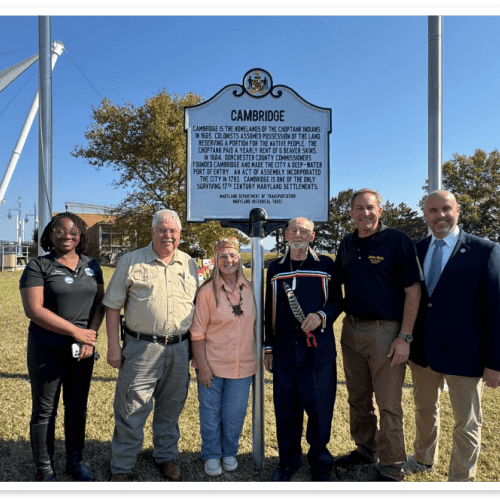
November is American Indian Heritage Month, when we honor the history, cultures, languages, and contributions of Native Americans, Alaska Natives, and Native Hawaiians. In 1990, President George H.W. Bush signed a joint congressional resolution designating this celebratory month. I had an opportunity to sit down with Dorchester County’s local tribal group, the Nause-Waiwash Band of Indians, and talk to them about what it means to be an American Indian in Maryland. I met with Chief Donna “Wolf Mother” Abbott and Tom “Speaks With Wisdom” Bradshaw, who serves as the chair of the Maryland Commission on Indian Affairs. Before moving on to their personal stories, I first want to share some history.
The Nause-Waiwash (pronounced nah-soo WAY-wash) take their name from the Nanticoke village, Nause, located on the Nanticoke River, and the Choptank’s ancestral village, Waiwash, situated along the Choptank River in the area of Locust Neck. The tribal group describes its members as descendants of the Nanticoke and Choptank peoples whose homeland was, and still is, Dorchester County.
THE CHOPTANK INDIAN RESERVATION
The town of Cambridge actually sits on traditional Choptank land. In 1669, the Maryland General Assembly laid out the Choptank Indian Reservation in the area. It was the only reservation on the Eastern Shore that the English granted in fee simple, meaning the Choptank owned the land outright, at least on paper.
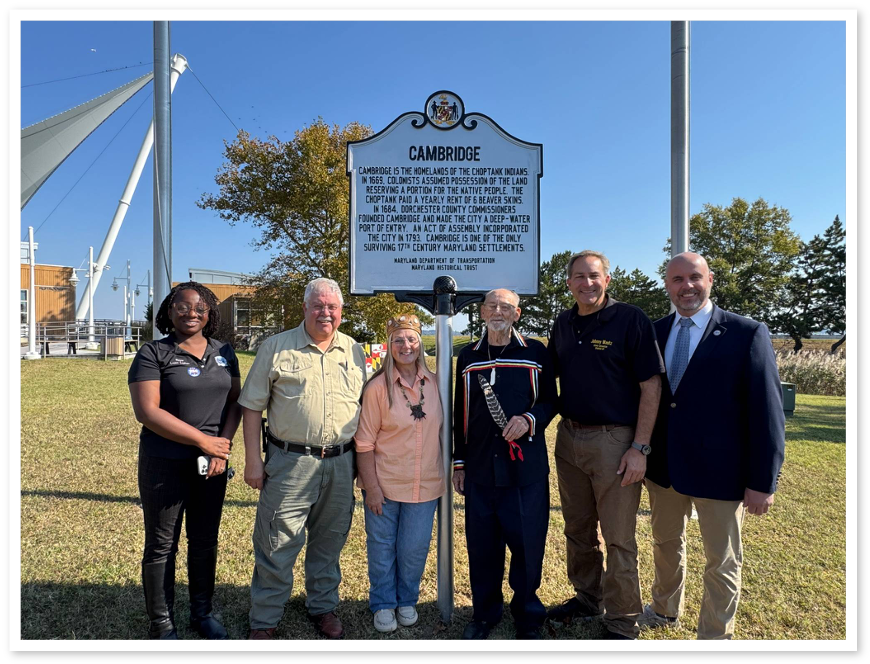
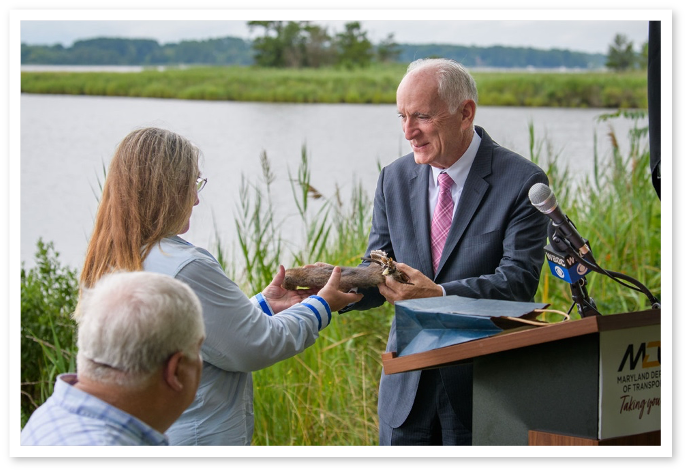
As history has shown, paper has never stopped settlers. Over the next fifty years, English encroachment pushed the Choptank into a smaller corner of their reservation. By 1719, they were confined to a narrow part of Locust Neck overlooking Goose Creek and the Choptank River. Around 1744, a few Nanticoke families moved onto the reservation rather than face removal to Delaware. The land at Locust Neck became known as “Indian Lands.” Choptank families lived there into the 1790s, and about ten years later, the State of Maryland bought the remaining land. It was the last colonial-era reservation in Maryland. In 2024, the State of Maryland and the Nause-Waiwash Band of Indians gathered to unveil a historical marker to acknowledge the history and commemorate the people who once called the Choptank Indian Reservation their home.
THE NANTICOKE AND DORCHESTER COUNTY
The Nanticoke, whose name comes from Nentego, “tidewater people,” were the most powerful nation in this part of the Eastern Shore. When John Smith sailed up the Nanticoke River in 1608, he found palisaded towns and people he called the best merchants he had met. Their principal town, Chicacone, stood on the west bank of the river just north of present-day Vienna.
The Nanticoke signed a peace treaty with Maryland in 1668, and in 1698 the General Assembly laid out a Nanticoke reservation of 5,166¼ acres around Chicacone. As with the Choptank, settlers moved in anyway. By 1742, after nearly a century of broken promises, Nanticoke leaders called a gathering at Winnasoccum in the Pocomoke Swamp. Colonial officials, alarmed by rumors of an uprising, arrested leaders and took sworn statements from Native witnesses. Two years later, in 1744, many Nanticoke accepted an offer of land and protection from the Six Nations of the Iroquois. Families paddled dugout canoes up the Susquehanna River into Pennsylvania, and their descendants eventually settled in New York and Ontario, Canada. Others moved east to the Indian River in Delaware. In 1768, the Maryland legislature authorized the purchase of the remaining Nanticoke rights to the Chicacone lands.
But not everyone left. A 1907 federal handbook on Native peoples noted that a small group remained in Maryland under the name “Wiwash” as late as 1792, numbering about 30 people. Those who stayed did what people have always done when their survival depends on not being noticed. They moved deeper into the marshes of southern Dorchester County. Here, they trapped muskrat, fished, crabbed, farmed small plots, married neighbors, and kept their family stories close.
One of the most interesting aspects of their survival to me was how these Native Peoples lived three centuries “hiding in plain sight.” I think an important part of their survival was an established system of paths. Choptank and Nanticoke people moved between their towns, fishing camps, oyster grounds, and hunting areas along trails that followed high, well-drained ground and avoided the many creeks and marshes. When the English arrived, they used these same routes.
One of these old paths is located on MD 343 at Lloyds, near the head of Gary’s Creek. The State Roads Commission and the Maryland Historical Society first put up a roadside historical marker in 1954. Seventy years later, the Nause-Waiwash asked for the story to be told differently. They pointed out that the old sign dates the path to “about 1663,” when local Native people had been walking it long before any English surveyor wrote it down. Working with the state, the descendants of the people who made the path rewrote the narrative for the new sign.
Dorchester County supported many Indian paths. Stephen Gary, an original Dorchester County judge, first recorded one of these trails on the north end of a creek while surveying the “Spocott” parcel in 1662. This path connected the former Choptank Indian Reservation at Locust Neck on the Choptank River to Jordan’s Point on the Chesapeake Bay. This Indian path eventually became a state road.
THE ORIGINAL CONSERVATIONISTS
I asked Chief Donna what it was like to grow up knowing she was part of this group of American Indians who survived by being resourceful. While she always knew her ancestry, they never really discussed it. Listening, I realized she was raised in a family- and community-centered environment, where everyone helped each other, especially during times of sickness and hunger. Each family raised a garden, hunted, and trapped, taking only what was needed, a culture of resourcefulness and respect, ensuring survival. Mr. Bradshaw recalled how he was taught at a young age to clean fish and dress meat, always being reminded to never take more than you need. Chief Donna shared how they even used muskrat liver in scrapple. Mr. Bradshaw emphasized, “Nothing went to waste, nothing at all.” As the conversation continued, I learned how the tribal people made their living in the woods and on the water. During logging operations, the sawmill came to the woods to finish the lumber, not the other way around.
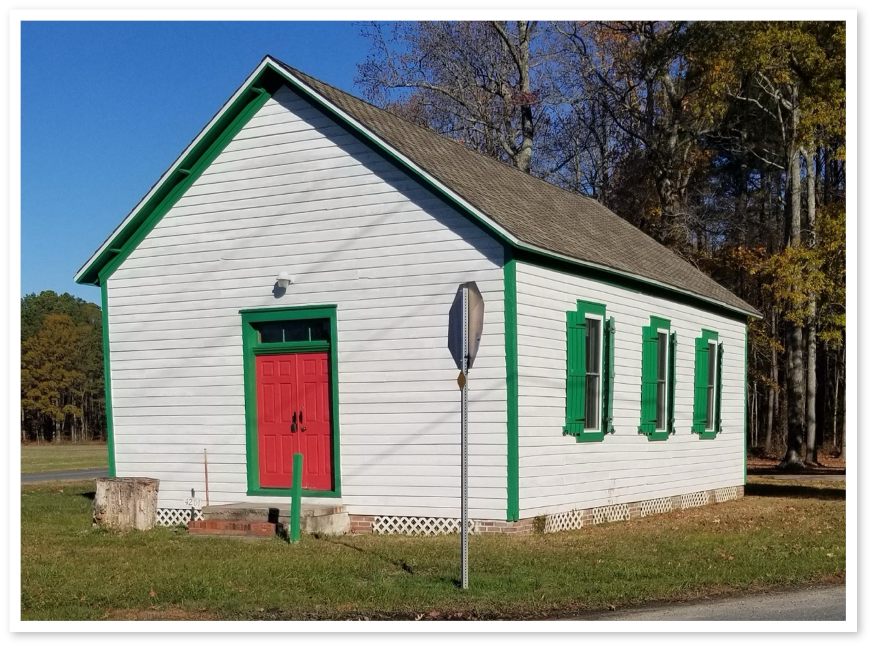
In addition to working the land, there were also Native watermen who read both the tides and the sky. Mr. Bradshaw asked me, “Do you know what a sundog is?” Often observed in colder months, it is a single or double rainbow-colored feature reflected through the clouds on one or both sides of the sun caused by light refracting through ice crystals in the sky. It is a cautionary sign to pay attention: bad weather may be coming. This reminded me how Harriet Tubman recalled being taught how to predict the weather from her father, Ben Ross, and read the night sky from the Black watermen. But they also had teachers, and it makes perfect sense that it was the American Indians who first shared this knowledge with the newly arrived Africans and Europeans.
Today the Nause-Waiwash Band of Indians are represented on the Maryland Commission on Indian Affairs, and Mr. Bradshaw serves as their chair. As in the past, they continue to serve their community by cleaning neglected cemeteries, sharing their history with schoolchildren, and putting their history back on the map, one historical marker at a time.
As you travel through Dorchester County, let your imagination transform our state roads into thousand-year-old paths, and be sure to include families and communities in those vignettes. Remember that their descendants still live here, in the marshes and towns of Dorchester County. Better yet, meet them. The Nause-Waiwash host their Native American Festival each September in Vienna on the banks of the Nanticoke River, and the Longhouse on Maple Dam Road welcomes visitors by appointment. If you want to learn about the skills they used to survive in Dorchester County, don’t miss the National Outdoor Show at the end of February.
Nause-Waiwash: Q&A
Q: Should I say American Indian, Native American, Native People, or Indigenous?
All of these terms are widely accepted, but the best choice is always the name a community uses for itself, such as “Nause-Waiwash” or “Nanticoke,” and when in doubt, ask. While some prefer being called Native People, other communities use “Indian” in their own names, including the Nause-Waiwash Band of Indians, the Pocomoke Indian Nation, and the Piscataway Indian Nation.
Q: Is the Nause-Waiwash Band of Indians a recognized tribe?
Not by the state or federal government. Maryland has formally recognized three tribes: the Piscataway Indian Nation and the Piscataway Conoy Tribe in 2012, and the Accohannock Tribe in 2017. The Nause-Waiwash are represented on the Maryland Commission on Indian Affairs, created in 1976 to serve the state’s Native communities and help them seek recognition. Neither recognition determines who a person’s ancestors were.
Q: Where did the Nanticoke who left Maryland go, and are their descendants still around?
Yes, and in several places. After 1744, many Nanticoke traveled north into Pennsylvania, where the city of Nanticoke is named for one of their settlements, and on to New York and Ontario, Canada, under the protection of the Iroquois. Others settled near the Indian River in Delaware, where the Nanticoke Indian Tribe of Millsboro was recognized by Delaware as a legal entity in 1881 and runs the Nanticoke Indian Museum. The Nanticoke Lenni-Lenape Tribal Nation in New Jersey also traces its ancestry to the Nanticoke. Families on the Eastern Shore of Maryland, including the Nause-Waiwash, remain in the homeland.
Learn more about the Nause-Waiwash Band of Indians
Suggested citation: Schablitsky, Julie. 2026. “Time travel with me, Dr. Julie, to meet Dorchester County’s First People!”
 Dr. Julie Schablitsky is a professional archaeologist and an adjunct at the University of Maryland, College Park. She is the founder of North Star Heritage, a cultural heritage business located on Maryland's Eastern Shore.
Notes
1 Maryland State Arts Council. n.d. Land Acknowledgement Project Overview and Resource Guide. Baltimore. Visit Dorchester. n.d.a. “Nause Waiwash Band of Indians, Inc.” Dorchester County Tourism. https://visitdorchester.org/listing/nause-waiwash-band-of-indians-inc.
2 Maryland Matters. 2024b. “Maryland tribe’s first female chief fights for identity, equality and preservation.” December 25, 2024. Turtle Tracks. n.d. “A quick history….” Nause-Waiwash Band of Indians. https://turtletracks.org.
3 Historical Marker Database. n.d.c. “Cambridge.” https://www.hmdb.org/m.asp?m=3963. Maryland Manual On-Line. n.d. “Dorchester County, Maryland: Historical Chronology.” Maryland State Archives. https://msa.maryland.gov/msa/mdmanual/36loc/do/chron/html/dochron.html. Rountree, Helen C., and Thomas E. Davidson. 1997. Eastern Shore Indians of Virginia and Maryland. University Press of Virginia, Charlottesville.
4 Historical Marker Database. n.d.d. “Treaty Oak.” https://www.hmdb.org/m.asp?m=3976. Maryland Matters. 2024a. “Highway marker a milepost in telling story of Nause-Waiwash people.” July 24, 2024.
5 AECOM. 2024. Native American Trails to Historic Roads: Historic Context and Methodology, Maryland. Prepared for the Maryland Department of Transportation State Highway Administration, Environmental Planning Division, Baltimore. https://www.roads.maryland.gov/OED/Native_American_Trails.pdf. Historical Marker Database. n.d.b. “Choptank Indian Reservation.” Erected 2024 by the Maryland Department of Transportation and Maryland Historical Trust. https://www.hmdb.org/m.asp?m=285669.
6 Nanticoke Lenni-Lenape Tribal Nation. n.d. “The Nanticoke.” Nanticoke Lenape Museum. https://nanticokelenapemuseum.org.
7 Hodge, Frederick Webb, ed. 1907–1910. Handbook of American Indians North of Mexico. Bureau of American Ethnology Bulletin 30. Government Printing Office, Washington, DC. Nanticoke Indian Tribe. n.d. “History.” Millsboro, DE. https://nanticokeindians.org/page/history.
8 Browne, William Hand, ed. 1908. Proceedings of the Council of Maryland, 1732–1753. Archives of Maryland, Vol. 28. Maryland Historical Society, Baltimore. (Depositions concerning Winnasoccum, July 1742.)
9 Historical Marker Database. n.d.g. “The native people of the Chicacone Village…the Nanticokes.” Nanticoke Historic Preservation Alliance, Handsell. https://www.hmdb.org/m.asp?m=66608. Maryland Manual On-Line n.d. Nanticoke Indian Tribe n.d.
10 Hodge 1907–1910.
11 Maryland Matters 2024b. Visit Dorchester. n.d.b. “Partner Spotlight: Nause-Waiwash.” Dorchester County Tourism.
12 Maryland Manual On-Line n.d. Nanticoke Indian Tribe n.d.
Modal title